
Gastrointestinal Bugs: Norovirus and Food Poisoning Relief
Norovirus and food poisoning: what you need to know
Norovirus and food poisoning can cause sudden vomiting, diarrhea, stomach cramps, and weakness. Many people improve with fluids and rest, but dehydration and severe symptoms need medical attention. If you or your child is sick and cannot wait for a primary care appointment, UrgentCare MDs can evaluate non-emergency illness at its Baytown clinic.
Norovirus is a very contagious virus that causes inflammation of the stomach and intestines. Food poisoning is a general term for illness caused by germs or toxins in contaminated food or drink. Their symptoms can overlap, so a medical evaluation may be needed to identify the likely cause and decide what care is appropriate.
If you are in Baytown, Crosby, or nearby communities and need prompt help, visit UrgentCare MDs or call the clinic for current hours and visit details. Walk-in access can be helpful when you feel too sick to wait days for primary care, but severe or life-threatening symptoms need an emergency department or 911.
Medical review: Clinical information in this article is attributed to Dr. Kamran A. Khan, M.D., Internal Medicine and Urgent Care, affiliated with UrgentCare MDs. The clinic should confirm the physician bio and any practice-experience details before publication.

How these stomach illnesses spread and begin
Norovirus often spreads through close contact with someone who is sick, contaminated food or water, or surfaces touched by the virus. People can become ill after swallowing a very small amount of the virus. The Centers for Disease Control and Prevention (CDC) says symptoms commonly begin 12 to 48 hours after exposure and most people recover in 1 to 3 days.
Food poisoning symptoms can start within hours or take several days, depending on the germ or toxin. That timing can offer a clue, but it cannot confirm the cause. A meal shared with family may affect several people, while others who ate the same food stay well.
In Baytown and Crosby, illness can disrupt work, school, and family care with little warning. If more than one person in your home is sick, help limit spread by washing hands with soap and water, cleaning contaminated surfaces, and avoiding food preparation for others while ill. Hand sanitizer alone does not work as well against norovirus as soap and water.
Common symptoms and risks
Symptoms vary, but both norovirus and foodborne illness can cause:
- Nausea and vomiting
- Watery diarrhea
- Stomach cramps or pain
- Sometimes fever, headache, or body aches
Vomiting and diarrhea cause loss of fluid and salts. Dehydration can become a concern when you cannot keep fluids down or lose more fluid than you replace. Watch for a very dry mouth, unusual sleepiness, dizziness when standing, or much less urine than usual. In babies, fewer wet diapers, no tears when crying, or unusual fussiness can be warning signs.
Young children, older adults, pregnant people, and people with weakened immune systems or certain chronic health conditions may face a higher risk of complications. If you care for someone in one of these groups, contact a medical professional sooner when symptoms are frequent, worsening, or making it hard to drink.
Blood in stool or vomit, severe or worsening abdominal pain, fainting, confusion, trouble breathing, or signs of severe dehydration call for emergency care. Call 911 for a life-threatening emergency. For less severe but concerning symptoms, an urgent care clinician can assess you and advise whether you need a higher level of care.
What to do at home while you recover
If symptoms are mild and you can drink, take small, frequent sips of water or an oral rehydration solution. Large amounts at once may trigger more vomiting. When you feel ready to eat, try foods you usually tolerate and return to your regular diet as you improve. Rest, and keep track of how often you vomit or have diarrhea and how much you are able to drink.
Do not give young children medication for vomiting or diarrhea unless a healthcare professional recommends it. Some medicines can be unsafe for children or may not be suitable for your symptoms or health history. Ask a clinician or pharmacist before using an over-the-counter product, especially if you are pregnant, older, have a chronic condition, or take other medicines.
To reduce the chance of spreading norovirus, wash hands well with soap and water, especially after using the bathroom and before eating or preparing food. Clean areas where vomit or stool has spilled using an appropriate disinfectant and follow its label directions. Do not prepare food for others while sick and for at least 48 hours after symptoms stop, as CDC guidance recommends for people with norovirus.
Keep children home from school or childcare while they are actively vomiting or having diarrhea, and follow the facility’s return policy. If you are unsure whether symptoms are safe to manage at home, contact a healthcare professional. You can also review UrgentCare MDs information about acute illnesses.
What to expect at UrgentCare MDs
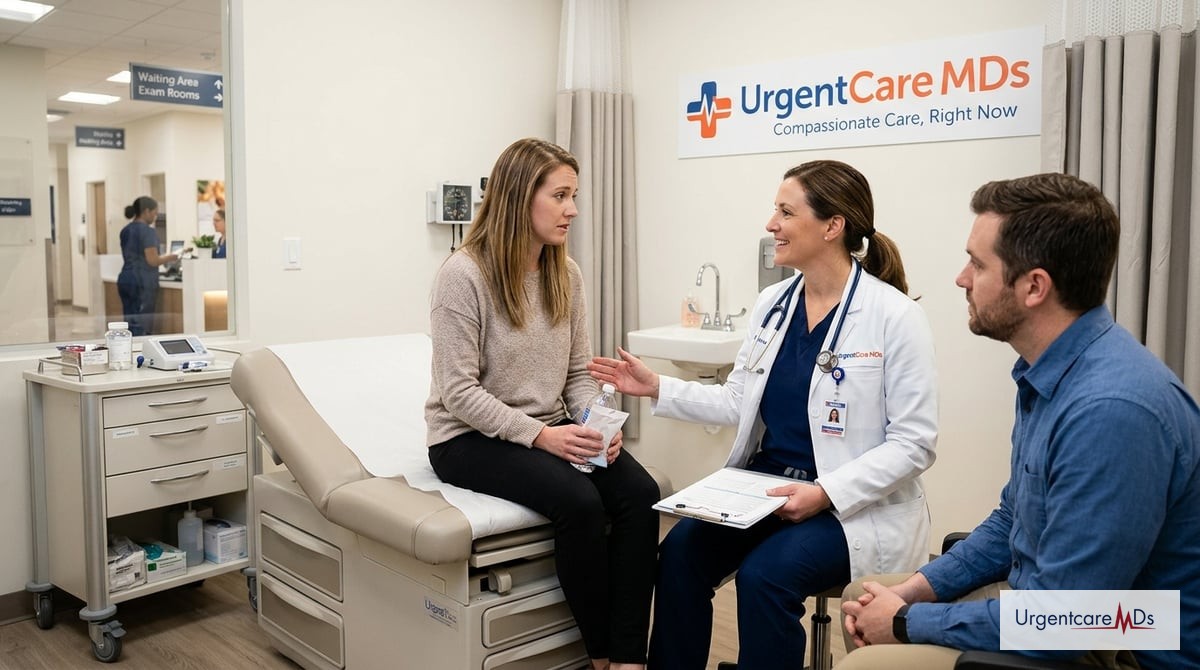
At an urgent care visit, a clinician will ask when symptoms began, how often you have vomited or had diarrhea, what you have been able to drink, and whether you have other health conditions. They may check your temperature, heart rate, blood pressure, and signs of dehydration. Bring a list of medicines and share any recent travel, unusual foods, sick contacts, or other family members with symptoms.
Care depends on your symptoms and exam. The clinician may recommend a plan for fluids and close monitoring, or decide that testing is needed. Not every stomach illness requires a test, and testing depends on factors such as symptom severity, duration, and your health history. If your condition appears too serious for urgent care, the team can direct you to an emergency department.
UrgentCare MDs serves patients seeking walk-in care in Baytown, Texas, including adults and children with non-emergency illnesses. On-site diagnostic services can help with some conditions, but the clinic’s website or staff can confirm which tests are available for your specific concern. For clinic information, see UrgentCare MDs. If symptoms are severe, do not delay emergency care while looking for a clinic.
When to visit urgent care or the emergency room
Choose care based on how sick you are, not only on what you think caused the symptoms. A walk-in clinic in Crosby or Baytown may be appropriate when symptoms are uncomfortable but you are alert, breathing normally, and able to travel safely. Call ahead if you have questions about age limits, hours, or services.
Consider urgent care for:
- Vomiting or diarrhea that is not improving, especially if drinking is difficult
- Mild dehydration symptoms, such as a dry mouth or less frequent urination
- Stomach symptoms with a low fever, if you are otherwise stable
- A child who is drinking less or has fewer wet diapers, but is alert and not showing emergency warning signs
- Questions about symptoms that are disrupting work, school, or usual activities
Go to an emergency department or call 911 for:
- Fainting, confusion, extreme sleepiness, or difficulty waking
- Severe dehydration or inability to keep any fluids down with worsening weakness
- Blood in vomit or stool, or black, tar-like stool
- Severe, persistent abdominal pain or a swollen, firm abdomen
- Difficulty breathing, signs of shock, or another life-threatening symptom
For mild symptoms that are improving, home care may be enough. Contact your primary care clinician if symptoms persist, return, or need follow-up, or if you have a chronic condition that could affect your care. If you cannot access primary care in time and your symptoms are non-emergency, acute illness care at UrgentCare MDs may be an option.
Local care for Baytown and Crosby families
Stomach illness can affect a whole household, and parents may have to decide whether a child needs same-day care while managing their own symptoms. An urgent care visit can provide an in-person assessment without waiting for a routine primary care appointment. Adults without quick access to a regular clinician can also ask for help when symptoms are acute and not life-threatening.
UrgentCare MDs provides urgent care services in the Baytown area. If you are searching for urgent care near me in Baytown or a walk-in clinic near Crosby, Texas, check the clinic’s website for its current location, hours, and visit guidance before leaving. The right care setting depends on your symptoms; urgent care is not a substitute for emergency services when warning signs are present.
Need an assessment? Visit or call UrgentCare MDs for guidance about walk-in care and available services. For severe symptoms, go to the ER or call 911. For other urgent, non-emergency concerns, start with the clinic’s services and visit information.
Medical sources and disclaimer
Clinical references: CDC, About Norovirus, and CDC, How to Prevent Norovirus. These sources describe common symptoms, typical timing, spread, and prevention steps.
This article is for general education and does not replace an examination, diagnosis, or advice from your own healthcare professional. Symptoms can have causes other than norovirus or food poisoning. Seek medical care if you are concerned, symptoms worsen, or you have a higher risk of complications.
Frequently asked questions
How can I tell if I have norovirus or food poisoning?
You usually cannot tell by symptoms alone. Both can cause vomiting, diarrhea, and cramps, and timing varies by cause. A clinician can assess your symptoms and decide whether testing or other care is needed.
How long does norovirus usually last?
Most people recover in 1 to 3 days, according to the CDC. Get medical advice if symptoms are severe, are not improving, or you cannot keep fluids down.
When should I take my child to urgent care for vomiting or diarrhea?
Seek urgent care if your child is drinking poorly, urinating less, or symptoms are worsening. Go to the ER for severe weakness, confusion, difficulty waking, or other emergency signs.
Can I go to work or prepare food after norovirus?
Stay home while you are sick and avoid preparing food for others until at least 48 hours after symptoms stop. Wash your hands with soap and water to reduce spread.
Should I go to urgent care or the ER for dehydration?
Urgent care may assess mild dehydration if you are alert and stable. Severe weakness, fainting, confusion, or inability to keep fluids down with worsening symptoms needs emergency evaluation.
Does every case of food poisoning need a test?
No. Testing depends on your symptoms, exam, duration of illness, and health risks. A clinician can decide whether testing is useful for your situation.
Can UrgentCare MDs diagnose norovirus?
A clinician can evaluate your symptoms and consider likely causes. Testing is not needed in every case, and the clinic can confirm which tests are available when you call.
Our team used AI tools to help draft this article, then edited and fact-checked it before publishing.